2014-12-31

Bye Bye 2014

2014 has been one of the best years in my life. Most of the time I was with my loved ones spending the time doing the things I love. I learned a lot. I had the opportunity to lead a simple life with not too much to worry about. I spent long hours just doing sports. I read countless books. I mentored people. I met old friends and class mates. I relaxed and procrastinated without having to feel bad about it (hint: play chess for better procrastination; FB sucks). I further improved my so-called "employability" and developed new "marketable skills". I let myself be inspired and developed lots of ideas to become personal projects. I experienced the most impressive sightseeing hotspots. I met lots of new people (without really speaking their language...)

 I lived a good life in 2014.


So, 2014, you have been a good year. Thank you so much. And thanks to all of my friends and especially P. for making it happen...

Happy New Year to all of you!


2014-11-03

Becoming involved in the Adult Industry (unexpectedly of course) [SFW]

After years of ignoring about.me I set up a profile a few weeks ago. Just as I expected nothing special happened. Then - some 4 days ago - my profile went viral... *cough* *hack*... I mean... I would never say that anything that I created goes viral. But there is a noteworthy increase in page views. Since end of September I got about 40 views per day on average. Four days ago I went from 40 to about 700 views per day. That is a nearly 18-fold increase. I would consider that to be significant.

Statistics

You have to realize, that about 70% to 90% of about.me users are
  • CEOs
  • evangelists of any kind
  • entrepreneurs (wealthy folks, of course)
  • fast learners
  • ivy league alumni
  • social media experts
  • super healthy fitness enthusiasts
  • self-proclaimed coffee addicts (It seems to be very hip to confess a coffee addiction in your resume. Now that is really creative. With the coffee commodity market being just over 100 billion USD worldwide I guess you are the sole coffee addict in the world. You seem to be a proper individual going your own way. Congratulations!)
oh, and bloggers... of course they are all bloggers! (I never considered myself to be a blogger. This is kinda my public diary. Sorry to say that, but I do not actually care if you read it or not and I will hide/delete it when the sabbatical is over anyway). Overall the about.me crowd runs this very world - at least that is the impression you get. So as the boring and not very successful person I am, I am kind of a misfit in comparison to the rest of the about.me crowd. And I was quite bemused that all these high profile folks apparently are interested in my personal profile (or at least clicked the photo).

Anyway, things became peculiar when I realized, that there was a growing number of views and an apparent increase in interest of people who are doing... kinda... adult related things for their profession. First I saw a number of self-proclaimed sex bloggers, "orgasm meditation coaches" (whatever that is) and people who are interested in sex and "the female orgasm" (I now realize, that all my life I wanted to become an "orgasm meditation coach" as I am very much interested in "the female orgasm" myself; maybe I'd just change professions... :D... ). Then I saw an increase in views of... models... And when I realized, that the Aziani Iron girls are the... models... particularly interested in my profile, things became really bizarre.

Aziani Iron... that's my type of girl!

So here I am, beloved pet of the Aziani Iron girls and bunny of a playboy bunny somewhere between feeling humbled and very intimidated (by muscles in particular).

People who viewed my profile #1


People who viewed my profile #2

2014-11-01

Meet Argentine Customs Procedures - Day 3 (Grand Finale)

Day 3 - Tuesday, October 14th, 2014

We arrive at Correo Argentino at around 10.30am to check the overall number situation. We take number 19 (Yay!). 18 numbers, how long will it take us? At the average German post office this would suggest a waiting time of 10 to 15 minutes. We decide to stay and wait.

Correo Argentino ca. 10.30 am
The call indicator is not working. We are outside waiting. Nothing happens. The lady who is handing out the numbers is sitting there waiting. Sometimes she moves some papers from one side of her desk to the other. A Correo guy joins her for 10 minutes, then leaves. Apparently he is strongly involved in the waiting business as well. There is no package being handed out. No numbers are being called. We are waiting. Correo folks are waiting. Everyone is waiting.

There is a constant stream of new arrivals of people who want to pick up their imported goods. As we are positioned outside (all seats inside are taken and the place is not too big) about two thirds of the new arrivals are asking us, where they can take their number. Slowly we are becoming the local Correo consultants discussing Correo waiting strategies with our fellow waiting folks. Btw, to take a number, you are not just taking a number. You have to go to the lady, sit down at her desk, ask her for the number, present your passport (pero claro, por supuesto!). She then starts to do something very laborious involving lots of paper and handwritten notes (and of course stamping the handwritten notes). And then you get the number.

Meanwhile we start feeling like  a sworn community of contrabandists with all the other people waiting for their imported goods. Have to continue waiting though. No progress. The numbers lady leaves, comes back again holding her mate (the Argentine beverage, that is), smiles, leaves again, comes back again, sits down, hands out more numbers. No package. Just lots of people waiting (video shows, what is happening in Argentina, when you are waiting for more than 1 hour in any given place; note to self: I have to rotate the video; it is okay on my mobile and it is okay in my media player on my laptop; not after uploading to blogger).


A German student is talking to her parents on the mobile at the top of her lungs... in German... constantly moving from outside to inside back to outside. A Swiss student (sitting on one of the seven available seats) asks herself if she should just beat the living daylights out of the German for the impoliteness. Being a polite Swiss girl she refrains from actually doing so. Nothing happens. No package in sight. Nobody leaves. Everyone is waiting.

Correo Customs Office with German student - I didn't want to take a picture of her, really!

After one hour (!) of utter waiting they are calling the first number. A man rushes to the back part of the offices and vanishes; does not return. Still no package. 5 (!) minutes later he appears with a package, an expression of deliverance on his face (in this case deliverance and delivery are pretty much the same). Suddenly there is bustling activity. Numbers are called in quick succession (relatively quick, that is). Proceeding with the packages takes some time, but there is actual progress.


At 12 flippin' 30, i.e. 2 hours after we arrived, it is our turn (YAY!). We are moving to the back part of the offices. There are 6 (six!) highly-paid government officials involved in the package handover process. I catch a glimpse of one of the guys monitors. He seems to be a cineast as he just checked the movies to take his girlfriend out tonight. I do not want to know, what the other Correo guys are doing at their computers... like seriously not.

The Swiss girl (№ 18) is still involved with one of the other government officials, so there are at least 2 people really doing some work. The actual task of these guys: check the stack of documents we brought regarding stamps ("verde"). We have to show our passports again. Important: he puts our package on the table in front of us. There is a spark of hope. Will this journey end soon? Will he just hand the holy package over to us?! ... No, of course he does not! ... His task is only to check the stamps. But do you remember, that we have to pay a fee of 40 pesos for the well appreciated work of these hardworking Correo guys? It is not his job to cash the fee. It is the job of the numbers lady. It is virtually a multi-tasking job she is carrying out.

We now realize that there is kind of a cashier's desk with... a second queue of waiting people. There was this one guy waiting there, when we entered the back part of the offices. He is still waiting. Why is that? Because the numbers lady is busy handing out numbers. As a matter of fact it is 12.30 and they are not handing out any numbers since 12 anyway (it is sort of their policy). So she is sitting in her number handover seat at the number handover desk waiting for people to tell them that, sorry, they do not have any numbers left for today. She is actually doing nothing. Just sitting there waiting for the possible arrival of new people. Meanwhile the man is waiting, the Swiss girl is waiting, we are waiting for the numbers lady to cash the fee.

At some point in time young missus ends sweet idleness. Gets up, runs around confusedly, moves papers and documents, gets her mate (aforementioned Argentine beverage), sits down again to wait for new arrivals to not hand out numbers. More waiting.

Endless minutes later she plucks up courage, gets up and approaches the young man waiting at the cashier's desk. It could have ended in a romantic love story, but she actually makes him pay his fees (which of course involves more paper, handwritten notes and stamping action). And ! the man! actually! gets! his package!

And then, it is our turn. We pay our fees and get our package. Simple as that. After 3 days of hard work and endless waiting, we are the happiest people in this beautiful world. We are home at 1.30pm.

The End (siiiiiiiiiiiiiiiiiiiii! CARAJO!)


...

Epilogue
  • I am ultimately impressed with the patience of Argentine people.
  • I am very impressed with the high number of business opportunities for the Lean Six Sigma crowd in Argentina
  • All of this reminds me of three capital letters: G, D and R

2014-10-30

Meet Argentine Customs Procedures - Day 2

Day 2 - Friday, October 10th, 2014


End of the AFIP clave fiscal queue at 8am

AFIP open their doors at 8.30 am. We are getting up at 7 to get there early. We arrive at 8 am. The queue of people leads from the (not yet opened) entrance doors along the whole block around the corner and further down half the block. All these guys are just here to take their number to get their clave fiscal at some point in time during the day. Resourceful Argentines are setting up their business selling mate and coffee from (what I would guess to be a stolen) shopping cart right next to the AFIP entrance. I slightly doubt that these guys have their clave fiscal category 3 that they need for their income from independent services to be taxed correctly. I refrain from asking them. Around 8.50 am it is our turn to take our number. The "offices" are packed. Our number: C50 (equals 350). A quick check of the monitor (via which the different numbers are called) reveals, that it takes about ten minutes to process ten claves fiscales. My mathematical mastermind brain tells me, that this means that there is empirical evidence that they need 1 minute per clave fiscal on average. Hence estimated time of processing number C50 would be about 350 minutes/6hrs later. We assume, that it might be our turn around noon. No sense sitting here waiting for 350 minutes. We decide to go home. But certainly not before taking a second number. If - by any unforeseen circumstances - we are missing the call for C50 we now have a second number: D24 (Yay!).

AFIP entrance around 9am; ad-hoc shopping cart coffee stand in the middle

AFIP offices around 9am


At home we are going for our "elevenses" with Argentine facturas y criollitos de hojaldre. At around 10.30 am we decide to go back to AFIP to just have a quick glance at the monitor and check the validity of our former statistical assessment. On our arrival none of the 500 numbers are left. All of them are taken. The "offices" are packed. There are people waiting outside the building. Inside you cannot move (and you cannot breathe). We are fighting to get to the information monitor. We look at the monitor. Calling number C23. That is only like 30 numbers away from our number. We decide to stay. Finally it is our turn at 11.15am.

The "offices" are not only packed. They are basically like eight kinda sales booths with eight (as per Argentine measures highly-paid) employees of the República Argentina. These guys are thoroughly carrying out what easily is the most important task of the Argentine fiscal system: checking the photocopy of P.'s Argentine identification (btw, we had to bring the photocopy ourselves), stamping the photocopy, hacking the whole data into their computer, getting the new number (automatically assigned by the system), writing down the number on the photocopy. Done! I am fairly sure, that years of training were necessary to develop the skills and capabilities to be able to carry out these tasks in all their complexity. And I am happy that the Argentine state is admitting to the non-automation of these processes, so that these poor souls still have some (highly-paid) work. The use of the internet is an imperialistic invention of the capitalist western industry nations.

Anyway, we are happy that we have got the clave fiscal now. Part 1 (out of 3) of our journey is done. We are leaving AFIP with a feeling of sadness. We have grown so fond of these guys. And while we are leaving, we are handing our second number (remember? D24.) over to a girl, who just entered the building only to desperately realize, that there are no more numbers left for the day. She only has to wait for what I think should be like 2 hours.

We are on our way back to customs. As we have kind of a deal with the customs lady (her name is Z.), that after we got our clave fiscal we are allowed to just come to her place directly without taking a new number. This makes us feel quite optimistic, that we might hold the package in hand pretty soon. Customs "offices" are packed. Lots of people. Z. is not available. Darn! After waiting about 15 minutes Z. shows up. Lucky us. We just jump the queue and head straight to Z.

So what is Z.'s actual job? She again asks us for the overall value of the package, hacks the value into the computer using our newly obtained clave fiscal, prints out lots of paper, neatly stamps all the papers she gave us and all of the papers we brought (with a stamp that says "verde" and accordingly comes in green color... neat!), hands the papers over to us. Done!

So this is the ultimate proof, that the package has undergone customs procedures, we were paying our taxes correctly, the value of the package is actually 18 EUR and hence does not exceed the limit of 25 USD. We are chatting a little more (which I guess is the reason for all the people waiting so long... ;) ...). Z. is really interested in our stories about Germany and the overall situation. We are happy, that we got our customs procedures done and are able to go to pick up the package straight away. This ends part 2 of our 3 part journey.

Second wind. We are all excited. This journey is soon to be over. We are heading to Correo Argentino's main office. It is a little further down General Paz, but it is not too far away. Full of anticipation we arrive around 1 pm. First entrance: nobody responsible. Second entrance: got the wrong door, nobody responsible.

Third entrance: the "offices" are packed. People are sitting and standing around with either desperate or angry looks on their faces. Some of them are just staring absent-mindedly. Fortunately no signs of hospitalism yet. After a quick discussion with the waiting folks it turns out, that - surprise - people here are served by numbers. The lady explains to us, that she is handing out the numbers manually. They are only serving 100 numbers per day. Since noon all the numbers are taken for today. It is Friday. Over the weekend the hard-working Correo Argentino guys have to rest (Correo Argentino is a public enterprise). Monday is a holiday. Come back on Tuesday. Thx a bunch. Goodbye!

Meet Argentine Customs Procedures - Day 1

Even in Argentina it sometimes happens, that you need imported goods. This is usually due to the particular things not being available for a decent price, with the necessary quality or because they are just not available at all. In this case - as the European boy I am - you just fire up your internet browser to order things for delivery to your parent's place back in Germany for them to send out the stuff to Argentina. This procedure is a little more on the costly side in terms of postal charges, but sometimes you just have to. So here we are...

P.S. I am a guest in Argentina. As such I will not personally comment on any of the events and (try to) just describe what I experienced...


Meet Argentine Customs Procedures


Fun facts to start with

DHL have offices in Argentina and they provide services here. Anyway, if you send out packages from Europe via DHL, they are handing these over to Argentina's public postal service Correo Argentino. I guess that is due to Argentina's customs procedures. Tracking the package via the DHL tracking identification is easily possible up to the Argentine border. In reality this means, that you are able to track the package from Hanover, Germany to Frankfurt am Main, Germany. The plane with the package is going to Buenos Aires directly, which is in Argentina, thus past the Argentine border, hence no tracking outside of Germany. My heartfelt thanks go out to the DHL guys for their service.

Day 1 - Thursday, October 9th, 2014

In the morning the doorbell rings - it is the Correo Argentino guy. He tells us, that he has got a package for us. We are getting downstairs only to find the Correo guy telling us, that he does not really have the package with him. He has got a kind of parcel registration card for us - including service fees to pay for Correo Argentino's hard work storing the package for us at their offices rather than delivering it to us directly (40 ARS). He tells us to go to customs with the registration card. There we would get the package.

We are going to customs right away. It is only like 2 blocks from here, so we are okay. We take a number, approximately 1h to wait. Quickly doing some grocery shopping while we are "waiting". Coming back to the customs office, the customs lady tells us, that we need a Clave Fiscal Category 3 (it is basically a specific tax number). Every Argentine who receives foreign goods, buys foreign currency or has any income from independent services needs such a clave fiscal. The Argentine government generously allows every Argentine to import goods for 25 USD...! per year...! which includes cost for postage and packing...! Goods exceeding the 25 USD are taxed with 50% of the value (i.e. the overall value of the goods plus postage and packing). To keep track of the 25 USD you need the clave fiscal. Young lady asks us, how much the value of our package is. As to our knowledge it is 18 EUR (23 USD). Her remark: "well, that is quite cheap". Yup, it is, ma'am.

We need a clave fiscal. The customs guys are doing customs things. Clave fiscal is a fiscal thing. So we are on our way to the Argentine tax authority (AFIP - Administración Federal de Ingresos Públicos) offices right away to get our clave fiscal (about 4 blocks away). The "offices" are packed. There are people waiting outside the building. Inside you cannot move (and you cannot breathe). We are fighting to get inside the building just to learn by chance, that we took the wrong entrance. There is a separate entrance where they are handing out claves fiscales only. As AFIP basically owns the whole block, we leave the queue and the building, half-way round the block is our entrance to get the clave fiscal. The "offices" are packed. There are people waiting outside the building. Inside you cannot move (and you cannot breathe). We are fighting to get to the information desk. The guy explains to us, that you have to take a number. They are only serving 500 numbers per day. Since 9.30 am all the numbers are taken for today (meanwhile it is 1 pm). After 2.5hrs of dealing (or rather not dealing) with officials we are going back home without a clave fiscal and without the package.

2014-10-26

Mass Murder to Mass Production

In the end I just had to surrender to the normative force of the factual. The basic means I had available to prepare my own yoghurt were just too basic to produce reliable results. I tried to imitate an incubator for my yoghurt bacteria with the means of
  • an electric oven with a mechanical timer (restricted to a maximum run time of 60 mins) and an analogue heat selector (which expectedly was extremely inaccurate)
  • digital clinical thermometer
  • repeatedly checking temperature of the electric oven using the clinical thermometer which I positioned inside the oven (open the oven, turn on the thermometer, close the oven, wait for the result of your measurement, open the oven, turn off the thermometer, close the oven... and of course, every time you open the door the temperature inside the oven changes...)
The production was extremely time-consuming. I had to constantly control the temperature (which was near impossible to be kept at the same level for more than 30 seconds) plus I had to reset the timer every 60 minutes (the oven only heats up while the timer is running). So for 10 hours I was constantly involved in breeding bacteria for them to produce my yoghurt. The whole venture was ridiculously unsuccessful.

Enter YOGURTEO.

Moulinex yogurteo (I thought Moulinex were bankrupt)


At some point in time mis casi suegros had pity with me and send out a new yogurtera as a gift for el chico alemán/el gringo to feel at home in Argentina. Defeat! But since then I went straight from mass murder to mass production. I re-established my old habits to eat at least 300 grams of yoghurt every night. Dairy Heaven!

Yoghurt Mass Production


I experimented with different recipes, i.e. particularly trying out different starter cultures and different times for the breeding process. The best results you get from
  • La Serenisima Activia Natural Yogurt (1 x 190 grams)
  • Sancor Leche entera extra calcio (1 litre)
  • Nestle Milk Powder (3 tablespoons)

What do you do with these things?
  1. cook the milk
  2. let it cool down (this is a very important step, if you want to prevent mass murder...)
  3. put the starter cultures (i.e. the yoghurt you bought) in a bowl and stir until smooth using a fork
  4. filter milk to remove skin
  5. put three tablespoons of milk powder into the milk (this is necessary to provide the known texture to the yoghurt, because the milk you are buying at the supermarket has been processed so much, that yoghurt you make from it just does not develop the same texture and taste as raw milk does... plus the milk I buy here has specifically been hyper processed in terms of additions of vitamins and calcium)
  6. put the prepared milk into the smooth yogurt; continuous stirring
  7. prefill the incubator glasses with the mixture of milk and bacteria
  8. set the incubator to 8hrs
  9. after 8hrs put the yogurt into the fridge for at least 6hrs

Always keep one glass of yogurt as a starter culture for the next turn.

Fun fact: there are two brands of natural, non-flavored yoghurt you can buy in Argentina, Sancor Yogs and the aforementioned La Serenisima Activia. Yogs is what I would consider kinda natural yoghurt: no preservatives, additional artificial or natural flavors, sweeteners, cereals, fruit stuff; plain yoghurt with some milk powder and gelatine (as a stabilizer... doh!). The Activia (which actually is a Danone product sold in Argentina under the name of La Serenisima, who in turn are the biggest dairy producer in Argentina and, with a 1.5 billion USD yearly revenue, apparently are an internationally renowned dairy brand [that's what wikipedia says]) packaging says it is natural yoghurt, but as a matter of fact there is lots of additional stuff in there, particularly sugar. But in terms of the used bacteria it produces the best results. So I kinda have to accept the sugar. And after the first turn of yoghurt production the additions to the original plain yoghurt are fairly irrelevant, because the initial yoghurt has been so diluted and the only thing that continues to grow inside the yoghurt are the actual bacteria I need as a starter culture.

As I was in an experimenting mood, I even tried to prepare myself some frozen yoghurt. Frozen yoghurt is fairly hip in Europe. I thought: easy! You just put the yoghurt in the freezer and you get... frozen yoghurt. Let me tell you the truth, that was one more failure in my dairy ventures. The freezing process turns the yoghurt (smooth and creamy texture) into a mess of once again liquid whey with little coagulated protein flakes swimming in there. Not very nice to look at. Doesn't change the taste though... :)

So no, frozen yoghurt is not just... freezing your yoghurt. It is processed ice cream just as well. If you want your frozen yoghurt to be really yummy, you put lots of cream. Which in turn means, yes, frozen yoghurt contains yoghurt, but that doesn't really make the stuff healthier. Put some toppings and it is even worse than your average regular ice cream...

Anyway, I am decided: I'm gonna quit my job and establish my own dairy company... :)

2014-10-25

Sabbatical - The Slightly Unexpected Second Half

So here I am, still in Argentina. I applied for an extension of my sabbatical until end of February next year and I had been discussing the issue basically since early July. But as it sometimes happens with companies, the approval of my application literally took until the final seconds of my (now old first) sabbatical period. Got the information, that I am allowed to continue my leave of absence on September 26th, which was the Friday before my assumed first working week after the sabbatical. The discussions were going back and forth between me and my manager in Germany. He always told me to keep calm and carry on, wait and see. I had a very hard time doing that. When I initiated the first negotiations regarding the sabbatical the then responsible HR lady told me, that currently it is impossible to go on leave of absence for more than six months. I always assumed she was right. And that is why I was prepared to just leave Argentina on September 28th and start my work on October 1st. I couldn't have waited any longer for the approval.

Anyway, they approved the extension and they even approved it to be a paid (!) leave of absence, which means, that I am even getting some money for my time off (but in turn have to improve certain skills, while being away from work). I am very grateful for that.

On the other hand in the end the overall procedure just took too long to execute the plan to go pay a highly esteemed friend in Austin, TX a visit. I just hope, that we're gonna make it next year. I am very sorry, Nicole... :(

2014-08-31

Experiments 3: Chess Master

When I was a boy, I was playing chess at a local chess club. We went to competitions. I was a fairly good player, but certainly not the best. At some point in time I quit playing chess (at the club and in general). I was just fed up with the overall organization of events.

And this is the story:
When we went to competitions we were usually playing 90min games (two players with 90mins, hence max. 1.5hrs per game). We went to different locations playing against other teams. Usually we got there with two cars. You were playing your games against the opposing team. After elimination from the competition there was nothing much to do. Usually the first of the cars left the location some time in the early afternoon taking the then eliminated players of our team with it. The second car had to stay until the competition was over.

As a fairly good player I usually survived the competition until after the first car left. And then there was Marius. Marius was not just a fairly good player. He was a real chess prodigy. Marius usually won a lot of these competitions. And Marius always made use of all the time he got. Due to me losing my last game right after the first car left, I spent endless hours waiting for Marius to win the competition. Those were the most boring days of my life. At some point in time I decided to not attend the meeting of the chess club anymore, because it was just too boring. And with not attending the meetings anymore, I basically quit all my chess playing ambition.

That is about 25 years ago. I rarely played chess during this time. Over the years the mobile revolution unfolded. I arrived in Argentina in early August. It was in the middle of the night, I couldn't sleep due to jet lag. I was just looking for some nightly deviations browsing the app store to find a proper game for my mobile. Frankly, all the games available are more or less bullshit (for my old-fashioned taste in games, that is). Then it crossed my mind, that I haven't been playing chess in quite a while. Had a look around and found the chess.com app. And it is... massive in terms of chess knowledge and learning opportunities. Lots of members allow you to play live chess at any given time of the day, opening databases, tactic trainers, daily puzzles, video sessions, lessons and study plans, automated computer analysis of finished games, conditional moves, etc. etc.

I am still not a very good player. Further down you see the analysis of my last game. I won, but still there are lots (!) of inaccuracies, mistakes and blunders in my chess playing. Have to learn a lot. But I am having so much fun playing chess since using the platform.


btw, the ELO ratings are a little bloated and do not actually reflect my real world ELO, but that is due to the nature of the ELO rating system itself.

[Event "Let's Play!"]
[Site "Chess.com"]
[Date "2014.08.15"]
[White ""]
[Black ""]
[ECO "C45"]
[ChesscomGameID "94993300"]
[Annotator "Chess.com Computer Analysis"]
[Result "1-0"]
[WhiteElo "1287"]
[BlackElo "1313"]
[TimeControl "1 in 3 days"]
[Termination ""]
{Inaccuracies(?!): 7 = 30.4% of moves | Mistakes(?): 2 = 8.7% of moves | Blunders(??): 2 = 8.7% of moves}

1. e4 {(Book Move)}  e5 {(Book Move)}
2. Nf3 {(Book Move)}  Nc6 {(Book Move)}
3. d4 {(Book Move)}  exd4 {(Book Move)}
4. Nxd4 {(Book Move)}  Nxd4 {(Book Move)}
5. Be3 $4 {(-2.9) BLUNDER - Oh no - a blunder! You should have played 5. Qxd4}
({BEST MOVE (0.44)} 5. Qxd4 Nf6 6. Nc3 d6 7. Bc4 Be7 8. O-O O-O   $14)
({BLUNDER (-2.9)} 5. Be3 Nc6 6. Nc3 Nf6 7. Bb5 Bb4 8. O-O Bxc3   $19)
5... Nc6 {(-2.9)}
6. Bc4 {(-3.09) ALTERNATIVE - Your position is getting even worse - you are now losing. The best line was 6. f3}
({BEST MOVE (-3)} 6. f3 Nf6 7. Nc3 Bb4 8. Qd2 d5 9. O-O-O dxe4   $19)
({ALTERNATIVE (-3.09)} 6. Bc4 Nf6 7. O-O Be7 8. f3 O-O 9. Qe2 d6   $19)
6... Nf6 {(-3.09)}
7. Nc3 {(-3.09)}  g6 {(-2.98)}
8. O-O {(-2.97)}  Bg7 {(-2.96)}
9. Bd4 $6 {(-3.4) INACCURACY - Your position is getting even worse - you are now losing. The best line was 9. Bg5}
({BEST MOVE (-2.98)} 9. Bg5 d6 10. f3 O-O 11. Qd2 Be6 12. Bb3 Ne5   $19)
({INACCURACY (-3.4)} 9. Bd4 d6 10. Be3 Ng4 11. Bf4 O-O 12. Be2 Nge5   $19)
9... O-O {(-3.34)}
10. e5 {(-3.62)}  Nh5 {(-3.81)}
11. Bc5 {(-3.56)}  Re8 {(-4.19)}
12. Qf3 $2 {(-5.43) MISTAKE - That was a mistake. Much better was 12. f4}
({BEST MOVE (-4.05)} 12. f4 d6 13. g4 Qh4 14. gxh5 dxc5 15. hxg6 hxg6   $19)
({MISTAKE (-5.43)} 12. Qf3 Nxe5 13. Qe2 Nf4 14. Qe4 Nxc4 15. Qxf4 d5   $19)
12... h6 $4 {(-0.91) BLUNDER - Lucky you! Your opponent blundered! The best move was 12... Nxe5}
({BEST MOVE (-5.37)} 12... Nxe5 13. Qe2 Nf4 14. Qe4 Nxc4 15. Qxf4 d5 16. Rfe1   $19)
({BLUNDER (-0.91)} 12... h6 13. Bxf7+ Kh7 14. Bxe8 Qxe8 15. Nd5 b6 16. Ba3   $17)
13. Bxf7+ {(-1.2)}  Kh7 {(-1.2)}
14. Qe4 $6 {(-1.62) INACCURACY - Perhaps better was 14. Bxg6+}
({BEST MOVE (-1.11)} 14. Bxg6+ Kxg6 15. Qe4+ Kf7 16. Qd5+ Re6 17. f4 Nxf4   $17)
({INACCURACY (-1.62)} 14. Qe4 Rxe5 15. Qxg6+ Kh8 16. Be3 Ne7 17. Qd3 d6   $19)
14... Qg5 $4 {(2.72) BLUNDER - Lucky you! Your opponent blundered! The best move was 14... Rxe5}
({BEST MOVE (-1.47)} 14... Rxe5 15. Qxg6+ Kh8 16. Be3 Ne7 17. Qd3 Qf8 18. Bb3   $17)
({BLUNDER (2.72)} 14... Qg5 15. Bxe8 d5 16. f4 dxe4 17. fxg5 Nxe5 18. gxh6   $18)
15. Be3 $4 {(-1.31) BLUNDER - Oh no - a blunder! You should have played 15. Bxe8}
({BEST MOVE (2.72)} 15. Bxe8 d5 16. f4 dxe4 17. fxg5 Nxe5 18. gxh6 Kxh6   $18)
({BLUNDER (-1.31)} 15. Be3 Rxe5 16. Bxg5 Rxe4 17. Nxe4 hxg5 18. Nxg5+ Kh6   $17)
15... Rxe5 {(-1.31)}
16. Bxg5 {(-1.23)}  Rxe4 {(-1.35)}
17. Nxe4 {(-1.31)}  hxg5 {(-1.31)}
18. Rae1 $6 {(-1.88) INACCURACY - Perhaps better was 18. Nxg5+}
({BEST MOVE (-1.28)} 18. Nxg5+ Kh6 19. Nf3 d6 20. c3 Bg4 21. Nd2 Nf4   $17)
({INACCURACY (-1.88)} 18. Rae1 Kh6 19. Nc3 Bxc3 20. bxc3 d6 21. Bd5 Ne5   $19)
18... d6 $2 {(-0.59) MISTAKE - Your opponent made a mistake! Better was 18... Kh6}
({BEST MOVE (-1.88)} 18... Kh6 19. Nc3 Bxc3 20. bxc3 d6 21. Bd5 Ne5 22. g3   $19)
({MISTAKE (-0.59)} 18... d6 19. Nxg5+ Kh6 20. Ne6 Bxe6 21. Rxe6 Bf6 22. Re8   $15)
19. Nxg5+ {(-0.71)}  Kh6 {(-0.71)}
20. Nf3 $6 {(-1.52) INACCURACY - Perhaps better was 20. Ne6}
({BEST MOVE (-0.71)} 20. Ne6 Bxe6 21. Rxe6 Bf6 22. Re8 Rxe8 23. Bxe8 Ne5   $17)
({INACCURACY (-1.52)} 20. Nf3 Bxb2 21. Re8 Nf6 22. Re3 Kg7 23. Rb1 Kxf7   $19)
20... Bxb2 {(-1.74)}
21. Re8 $6 {(-1.99) INACCURACY - Perhaps better was 21. Bd5}
({BEST MOVE (-1.63)} 21. Bd5 Nf6 22. Be6 Ne5 23. Bxc8 Rxc8 24. Rb1 Nc4   $19)
({INACCURACY (-1.99)} 21. Re8 Nf6 22. Ree1 Ne5 23. Nxe5 Bxe5 24. f4 Bd4+   $19)
21... b6 {(-1.22)}
22. Rfe1 $2 {(-2.28) MISTAKE - That was a mistake. Much better was 22. Rb1}
({BEST MOVE (-1.22)} 22. Rb1 Bf6 23. Bd5 Bb7 24. Re4 Rf8 25. g4 Bg7   $17)
({MISTAKE (-2.28)} 22. Rfe1 Nf6 23. R8e3 Ne5 24. Bb3 Bd7 25. Nxe5 Bxe5   $19)
22... Bb7 {(-1.84)}
23. Rxa8 {(-1.74)}  Bxa8 {(-1.75)}
24. h4 $6 {(-2.01) INACCURACY - Perhaps better was 24. Re8}
({BEST MOVE (-1.64)} 24. Re8 Bb7 25. Bb3 Bg7 26. h4 Nf6 27. Re1 Ng4   $19)
({INACCURACY (-2.01)} 24. h4 Ne5 25. Nxe5 Bxe5 26. Bc4 Ng7 27. g3 Nf5   $19)
24... Bc3 {(-1.64)}
25. Re8 {(-1.5)}  Bb7 {(-1.65)}
26. g4 $6 {(-2.03) INACCURACY - Perhaps better was 26. Bb3}
({BEST MOVE (-1.24)} 26. Bb3 Nf6 27. Rf8 Ne4 28. Rf7 Nd4 29. Ng5 Nxg5   $17)
({INACCURACY (-2.03)} 26. g4 Kg7 27. gxh5 Kxf7 28. Re3 Bf6 29. h6 Ne5   $19)
26... Ng7 $2 {(+Mat01) MISTAKE - Your opponent made a mistake! Better was 26... Nf4}
({BEST MOVE (-2.25)} 26... Nf4 27. Bg8 a5 28. Bc4 Ne5 29. Nxe5 Bxe5 30. Re7   $19)
({MISTAKE (+Mat01)} 26... Ng7 27. Rh8#   $18)
27. Rh8# {(+Mat01) WHITE WINS - Play might have continued...}
({CONTINUATION (+Mat01)} 27. Rh8#   $18)
1-0

2014-08-23

Experiments 2: Dog Whisperer


I have never been a dog kind of a person. We had a cat, when I was a little boy. I love cats. At some point in time my father developed a very strong allergy to cat proteins, so we had to give away all the pets we had. Years later my parents went for a dog. But that happened after I already left home and went to the university. I never had any kind of relationship to this dog. I just met him occasionally for only very short periods of time. I never liked dogs anyway... until I met

La Gina

La Gina's general behavior is usually an instantiation of one of the following three behavioral patterns:
  • cutest cutie pie doggy and heartbreaker
  • spoilt little brat
  • utter terrorist
When I came to know her, she was in full control of everything: food, black little rubber bone, plastic chicken, the apartment, the leash. And she was ordering us around at her own will. At times I used walking Gina as a substitute for going to the gym. She was pulling the leash so hard, that I got a proper upper body workout every time we went out. It was pretty annoying.

Everything I knew about educating and training a dog was basically that you have to be a dominant leader ruling your dog's world. You have to actually dominate your dog. Always. I never liked the idea, because I do not want to dominate anyone. I hate people, who are treating their dogs (or rather any animals) in a bad way. But at times it happened, that I was so fed up with what Gina did, so annoyed with her, that I became exactly that: a person dominating a dog by physical means. No, I was not hitting her, I was not kicking her, I was not hurting her, I was not abusing her. Anyway, the things I did were not friendly. I tried to intimidate her. I yelled at her. At times I did, what so many dog owner's do: I threw her on her back and actively dominated her. Now I am more than sorry for that. I was extremely unfair.

At some point in time I realized, that I was constantly talking English to her. I furthermore realized, that as a German speaking guy I could just as well speak German to her. It is basically the same for her, because she does not understand any human language in all its complexity. She does not comprehend. She does not even comprehend single and simple words or commands (e.g. in Spanish). She just learned how to react to certain human behaviors so that all her doggy needs are satisfied in their best way. She actually just wants these needs to be satisfied.

It is actually common sense, but all "dominant" dog owners do not seem to properly grasp the meaning and consequences. Let me try to describe that in kind of a metaphorical way:
I am currently staying in a country, where I do not actually speak the local language. I am a German in a Spanish speaking country. Imagine I would live with a few Spanish speaking guys. I do not understand the meaning of anything they say. They are providing me with food, but they never let me leave the house alone. And sometimes - for whatever reason - they are coming at me, yelling at me, dominating me. They are throwing me to the ground grabbing my neck. They are tying me to a leash making me leave the safe apartment pulling me through an overwhelmingly stressful city with even more Spanish speaking people I for the life of me cannot understand. How intimidating is that? I as a human would be terrorized.

And I as a human am in a position to understand Gina. On the other hand Gina as a dog is not at all able to comprehend my human motives and behaviors. She is fully depending on me. It is my utmost responsibility to take the best care of her and try to understand her the best I can, not make her understand me. She will never be able to understand. Not in a human way. Hence it is my very own responsibility to learn and educate myself before trying to educate a dog.

So with this rationale I kinda changed my approach. I bought a couple of books to learn about proper dog education:
  • Turid Rugaas: On Talking Terms With Dogs: Calming Signals
  • Turid Rugaas: My Dog Pulls - What Do I Do?
  • Owens, Eckroate: The Dog Whisperer: A Compassionate, Nonviolent Approach to Dog Training 
Particularly the "calming signals" book is super interesting and you immediately get a better understanding of what your dog is communicating and how to properly react to it. There seem to be a lot of misconceptions, where humans try to take dog behavior for human behavior (dog is yawning => dog is tired; dog is flicking his tongue => dog is hungry). Furthermore I bought a clicker and read myself through numerous clicker websites, watched a large number of clicker youtube videos.

So here I am trying to teach Gina to always be a heartbreaker. I am running around with the high-pitched voice of a five year old, doing an over-exaggerated "muy bien, muy bien, MUUYYY BIEN!", whenever she is slightly turning her ears. The clicker is always with me. We are going through clicker sessions and she kinda learned, that positive actions will be positively sanctioned. She is able to 'Sit' and 'Touch' reliably (that is, inside the apartment without any further distractions). She is not pulling the leash anymore. And she is now doing sort of a sales job. She is getting a fixed daily salary (kibble once a day in the evening). She earns the rest as variable pay in treats, whenever she sells me behavior I like. Sounds like corruption? It is corruption. But it works. Sounds mean? It is not. She is getting the same amount of food. She is a very intelligent dog. It is a stimulus for her intelligence. She is actually playing and she is very excited about that.

One thing is still a little awkward: with clicker training you actually want to make use of natural behaviors of the animal and "shape" them (using positive reinforcement in small steps) to become complex actions. A prerequisite is... some behavior you can positively reinforce. With the negative sanctioning approach telling her what not to do, Gina apparently learned over time, that it is best to not do anything at all rather than sit and stare (which is the most non-natural behavior for a dog). So it is a tough job to animate her to do something more creative than just staring at me. But we'll come to that.

Animated GIF with 2hr footage of Gina's broad variety of behaviors

Thank you Monika. You are getting a lot of good karma here..

2014-08-21

Whey too hot

(haha, get it, get it? nudge nudge... took me weeks to come up with this one...)


Yogurt production stuck at an overall level of 1kg produce. I do not have the slightest clue, what is wrong with the milk (or my starter culture) here. Was using a clinical thermometer (range 32°C - 43°C) to make sure, that my precious bacteria are alive and well when I feed them (and of course I sterilized the thermometer before using it for my experiments... ;) ...). Kept them at a constant 37°C for hours. Nothing. Tried the curd thingy again. This time even the coagulation did not work. I just blame the milk for it.

Rewind. Repeat.

Oh and btw, it is mid-Winter in Córdoba and today it was like 34°, sunny. So it actually is way too hot.

2014-08-19

Experiments 1: Mass Murderer

I am of German origin. German cuisine is special (as is the cuisine of every other country as well). I am not talking about sausages. (Fried and grilled) sausages are part of the cuisine of many countries.

I am not talking about barbecue either. Germans think of themselves as the world champions of barbecue. They are not, not even close. They just deny of the mere existence of barbecues and grills outside of Germany. This makes Germans world champions of barbecue in their own perspective. And no, not even your ridiculous Weber Grill helps. Ever noticed, that "Weber" sounds German, but is an US American company? Go figure...

I am not talking about beer. It is true, Germans tend to drink a lot of beer and there is a large variety of beers, but look at the Belgian and you will find out, that there are other countries with a better choice of beers. Ever seen the average Argentine serving, if you order "para tomar una cerveza, por favor"? Germans would be very surprised to see, that there are countries, where the single serving of a beer is about two to three times the amount you get in Germany (if you order a beer in Argentina without specifying the size of it, you get a 1 liter bottle of beer; in Germany those do not even exist). Yes, the Germans have their infamous Oktoberfest in Munich, but have you ever noticed that about 90% of the visitors are US Americans, Japanese, British and Indian? The 10% of German visitors are usually staying at the Weinzelt not having beer at all...

I am not talking about bread. It is true, Germans do have specific types of bread, that you do not easily get somewhere else. Ever noticed, that the same applies to other countries (see Injera, Hallulla, Naan, Melonpan, Sac Ekmeği)?

I am more talking in terms of diet actually. The typical German diet includes lots of dairy products. There is a broad variety of dairy products available. And I have never seen such a rich variety of dairy products in any other country.

A major part of my personal daily diet in Germany consists of (non-flavored) yogurt and curd (particularly quark). I typically eat curd and fresh fruit as part of my Müesli in the morning (if I am having breakfast at all). I like yogurt to be part of my salad dressings and as a generic ingredient of my lunch. I adore a proper Ayran or Lassi for drinks. In the evening I typically eat at least 500 grams of non-flavored yogurt without anything else. Besides that I of course eat all kinds of cheese (yes, all of them) and all other kinds of processed (meaning soured, filtered, concentrated, coagulated) and non-processed varieties of milk. I die for fresh raw milk bought from a farmer directly (preferably with the slightly warm body temperature of a cow, i.e. freshest). No, I am not a pervert. I just like my food to be of a rich, natural (!) and pure flavor.

Why am I telling you all of that? Because it seems that most other cultures do not appreciate yogurt and curd as much as I personally do. Staying here in Argentina I can buy lots of yogurt. They have got huge coolers with yogurt, all artificially flavored. If I am lucky, they have got this one brand that provides non-flavored yogurt for a ridiculously high price (compared to the flavored varieties). So there is a huge shelf with what feels like 250 different types and brands of flavored yogurt. And somewhere in the darkest corner of this shelf, there is my precious: a single 190g (hilarious! I could inhale that in under two seconds!) pack of non-flavored yogurt for - believe it or not - 9 friggin' pesos (where you get the same amount of flavored yogurt for about 5 pesos right now). And I am like YAAYY! And it's close to the expiry date, but I don't care, because I've got my precious and I am running to the cashiers to save the final, the ultimate pack of 190g of non-flavored yogurt and I am the happiest man in the world...

...and... no curd! ... I repeat: no curd! ... They are not selling curd here. Nothing. Never. No supermarket provides curd. No deli shop provides curd. No health food shop provides curd. No curd!... It's like: NOOOOO, por faVORRR! And I feel my body craving for curd. I am like a man lost in the desert: curd! CURD! I NEED CURD!... but in this matter the Argentine are just utterly relentless...

So when I was back in Germany I planned to bring lots of non-flavored yogurt and curd with me. But then I figured, that it might not be the best idea to do so taking flight security regulations into account. Suddenly it hit me: I have to prepare my own yogurt and curd! Heureka! That is the solution of my curd dilemma.

So there I was, 39 going on 40 not having the slightest clue of what might be the actual difference in the production of yogurt and curd, but determined to finally overcome all obstacles and provide myself with a proper dairy diet in Argentina. I knew, that both yogurt and curd where kind of "sour milk" and I knew, that some kind of bacteria are involved in producing yogurt. I knew, that curd is often mistaken for yogurt, but it is really not the same. Nobody was able to provide answers to me (with the exception of my dearest sister, whose studies of food sciences sort of helped). I actually had to do some additional research to find out, that
  • yogurt is basically milk soured and fermented with the help of lactobacillales without any further processing. Particularly Lactobacillus delbrueckii subsp. bulgaricus and Streptococcus thermophilus are used as the starter cultures. These define the product "yogurt". Lactobacillus acidophilus, Lactobacillus subsp. casei, and Bifido-bacteria may be added to yogurt as probiotic cultures.
  • Curd is a very immature state of cheese production, which is made from fermented milk by coagulating (curdling) milk proteins with the use of enzymes/rennet, acid treatment (e.g. for Cottage cheese, Quark (!), and Cream cheese) or heat-acid treatment (e.g. Paneer, Ricotta and Queso Blanco) . The bacterial cultures used to start the fermenting process for curd includes (but is not limited to) the ones that are used for yogurt.

Lactobacillales

So what is the actual difference? Yogurt starter cultures by definition contain Lactobacillus bulgaricus and Streptococcus thermophilus. The product "yogurt" is finished with the fermentation of milk with these specific bacteria reaching pH 4.5. Fermentation is stopped by cooling down the fermented milk to below 7°C. Curd on the other hand makes use of a broad variety of unspecified Lactobacillales. It is the result of both the fermentation and curdling process steps.

Fun Facts:
  • The curdling automatically sets in at some point of the fermentation process due to the increasing acidity of the fermented (i.e. soured) milk.
  • Neither curd nor yogurt are considered to be truely probiotic as per FAO/WHO regulations, although both contain living microorganisms. To be classified as a probiotic a product must be or must contain live microorganisms (generally numbering one billion) which are resistant to gastric acid, bile and pancreatic juices and reach the target site (small intestine/large intestine) in numbers sufficient enough to elicit a beneficial effect. The number of available live microorganisms for curd is not quantified. The yogurt producing bacteria are not considered probiotic. This in turn means, that probiotic yogurt is a product, where probiotic microorganisms have been added to the original yogurt in sufficient amounts and that the beneficial effect of the final product has been clinically tested.
  • Curd produced by coagulating fermented milk via acid treatment is usually more fragile then rennet processed curd, because of the loss of calcium.
  • Henceforth, curd produced by heat-acid treatment retains 90% of the protein available in the milk instead of only about 70% with rennet treatment. This is due to the fact that whey proteins usually are not affected by acid coagulation. If there is a heat treatment, the whey proteins become sensitive to acid coagulation. This in turn means, that a higher amount of protein can be retained.
All this knowledge could be gathered thanks to Cornell University (Yogurt, Cheese) and furthermore to the very detailed descriptions of The Dairy Science and Technology eBook of the University of Guelph, Canada.

So with all of this knowledge I tried two simple recipes:
 Homemade Yogurt
  1. prepare milk by heating it up to 90°C max. (no cooking!)
  2. let it cool down to 42°C max.
  3. add living yogurt cultures (you just buy fresh natural yogurt and stir a spoon of it into the warm milk for inoculation)
  4. keep the temperature for the inoculated milk between 30° and 42° for at least 4 to 7hrs and let the milk ferment
  5. put the stuff in the fridge to stop fermentation
Homemade Curd
  1. buy milk (1l)
  2. pour the juice of one lemon (or lime) into the milk and stir
  3. give the stuff 30mins to 1hr to coagulate
  4. filter the whey (if you want to get rid of
  5. put the stuff in the fridge
Trying out the yogurt-making for the first time was the ultimate success. In no time I had 1kg of proper yogurt. The taste of the yogurt was quite close to the original I bought. Everything seemed to be perfect. Problem through the process was, that I do not have a thermometer available. I basically had to guess temperatures. Apparently my guessing was pretty good.

When I went for the production of the second kilogram of homemade yogurt, the disaster happened. My temperature guessing was not very good. Apparently the milk was not cool enough as per step 2 of the recipe. I added the bacteria a little too early. And so I became a mass murderer. Millions of Lactobacillus bulgaricus and Streptococcus thermophilus were burned to death in a second. And I did not even realize it. So I kept all the corpses cosy and warm for the next 7hrs, because I thought they would live the perfect bacterial life and prosper and ferment. But in the end: nothing, just 1 litre of sterile milk with millions of bacteria corpses. Single-handedly I killed a whole (yogurt) culture.

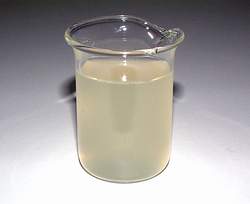
"I can see dead bacteria."
Tried to make curd from it by pouring the lemon juice into it. Coagulation kinda worked. In the end I had a "soup" of partly coagulated dead yogurt bacteria in sterile milk. Filtered it. The taste was... ... okay. The texture was not.

Rewind. Repeat.

2014-08-18

Recently in Córdoba

I am back in Argentina. Have been here for the last about ten days. And in the tradition of my stays in Argentina I have been involved in lots of experiments and "firsts" again. I particularly experimented with
  • food
  • animals
  • leisure activities.
Meanwhile we went to see Stravinsky's Sacre Du Printemp at Teatro San Martín, met friends (saludos a Neda, Ramiro, Sergio), had lots of empandas y malbec (y tiramisu).

I had a hard time not to write about the political and economical situation here. The whole discussion in context of fondos buitre is not only ridiculous. It is rather dangerous for the country and its people as a whole. And it makes me angry...

Condor; not in Córdoba though... :)
Anyway, yesterday there was an actual "flock" of condors over the city. Six apparently young condors circling only like one block away. These birds are just super impressive. Although I do not really understand, what they are looking for in the middle of a 1.5 million city, when they've got the sierras only like 50km from here. As they are vultures, they are usually not hunting for any living animals.

2014-08-08

Argentina Part 2

After coming back from Switzerland I (unexpectedly) had two weeks without any particular goal. The bad weather conditions that forced me to discontinue my hike lasted for at least one more week after I left.  So in the end it was the best decision to leave.

During the two weeks "spare time" I visited a couple of friends and caught up with some administrative work I should have done a long while ago: taxes! I gathered the missing stuff for 2012 taxes, I prepared the 2013 taxes, I went through and sorted lots of documents, letters, invoices, I cancelled a couple of contracts for services I haven't used in a long time, had a look at my budget and the overall financial situation...

Now I am on my way to Argentina again. And I am very much looking forward to it.

The things I am looking forward to are:
First and foremost Pau y La Gina
Being with lots of warm-hearted people
Meeting friends
Empanadas y Malbec on the balcony
Bon-o-bons, Chipas o Criollos with my Mate
Running in the parque
Being with lots of people who don't give a shit about traffic lights and who are crossing the street,  whenever they like
Proper avocados

The things I am particularly not looking forward to:
Buying cheese and ham that comes in slices about two layers of atoms thick (yes, you can read the newspaper through these slices)
Complete denial of the existence of non-flavoured yoghurt and curd
Not being able to properly speak the local language
Having to think about security issues every time I open the apartment door

2014-07-21

E1 - official end of first half

It is with greatest sadness that I have to announce the premature discontinuation of the E1 project as per today.

Yesterday I have been staying at the hotel to rest and see how the weather develops. Just as weather forecast said it started to lightly rain in the early afternoon leading to heavy rainfalls in the late afternoon and to thunderstorms through the whole night. As per forecast this weather is going to continue until Friday at least, maybe even Sunday.

I wouldn't have had problems with that on a lower altitude. Actually the first few days of the hike were like this. If I am going on a mountain hike though, I'd rather want it to only lightly rain or better to be dry. Even if it is sunny there is a lot of water in the mountains. If it is raining you are basically walking in a gutter, because the paths serve as such for the water. It is all slippery and muddy. It is not necessarily dangerous. I still respect nature and my own exhaustion at this point in time though. No need to obsess or force myself to continue.

Right now I am sitting in the train from Sedrun to Andermatt. At the altitude I planned to hike there is a dense fog. You can barely see 20m. I will go via Andermatt - Göschenen - Basel SBB back home to Braunschweig. This will take me 10 hours by train.

That said I hereby officially declare the first half (!) of the E1 hike from Lake Constance to Como to be successfully (of course) completed. Continuation of the journey beginning in Sedrun will commence, when circumstances are better (i.e. most probably some time next year :( ...).

And now I am coming back from Swiss mountain cold (14ºC today) to Northern German summer heat (30ºC today)... :)

2014-07-20

Stage 11: seriously? ... naaahh!

So today I woke up with a terrible headache, knee aching, shoulders aching. After my motivational and weather issues yesterday, I simply decided not to continue today. I was walking for 10 days in a row with about 200km covered. I crossed a couple of hills and mountains up to 2350m high. Can't be bothered today. Cancelled all further accommodation and extended my stay at the hotel in Sedrun for one night to decide how to proceed.

Actually I feel like I finished all I wanted to do. To continue across the mountains to Italy would be a nice thing to do, but I could do that at some point in time in the future as well.

Today I will just stay in bed, eat a lot, read and watch Bob Ross' Joy of Painting on tv... :)

2014-07-19

Stage 10: Etzlihütte - Sedrun

The day started early today. Breakfast was served at 0700. Checkout had to be done until 0830. The breakfast was simple, but good.

Yesterday I did not involve myself too much in conversations. I was doing my thing: reading, writing. But today we talked a lot. Turned out that the son of the older lady I was talking to is currently doing a road trip through South America. I did not ask her if Ernesto Guevara was sort of an idol for her son, because I considered that to be rude. Anyway we had very interesting discussions about security in South America (her son's backpack was stolen in Bolivia). And she was very interested in my story about the current hike through Switzerland. She was not really believing though, that I came all the way from Constance to Etzlihütte...

Our ways parted at around 0900, when I left. Again it was sunny, but this time a chilly wind helped me keep my body cool enough to not break out in sweat at once. The mountain trail crossed a scree slope with a light ascent up to about 2330m to then lead to a beautiful high valley that continued down to Sedrun and Rueras at around 1300m.

It was very picturesque. There was a mountain stream running through the whole valley. At some point a natural pool had developed. Some fellow hikers were having their picknick there. Nobody entered the pool though,  because despite being gorgeous to look at the water was ice cold. Furthermore the actual stream apparently had a strong current, so it wouls have been dangerous.

I continued my way down to Sedrun to my hotel, where I arrived at around 1300. Beautiful hotel with super nice food.

Anyway after arriving I was super tired. Had to catch up on sleep. Then I kinda went through some motivational issues on one hand and weather problems on the other: the next four stages of my hike are all mountain hikes (Maighelshütte - Cadlimo-Hütte - Capanna Dötra - Biasca). And the weather forecast for at least the next three days tells me, that there will be thunderstorms and lots of rain. These are in no way optimal conditions for a mountain hike. Furthermore I am just tired,  everything aches, I did not take a single break in 10 days, and after crossing the first mountains I feel like I 'achieved' the essential parts I wanted to achieve.

Based on these thoughts I plan to go to the mountains tomorrow. I have to be quick to get to the first hut until midday,  because rain and thunderstorms will hit in the afternoon. Afterwards I will see if I am able to continue or if I have to stay at the hut. I will continue to Biasca depending on the weather. I may end my journey a little earlier than I thought and go back home from Biasca though.